Wednesday, July 16, 2008
Meet our spiritual director: Father Paul H. Dumais
Father Paul H. Dumais, a priest of the Diocese of Portland, is presently assigned to Saint Joseph's College of Maine as chaplain. Fr. Paul completed a Master of Arts in Philosophy at Boston College in 2001 while at St. John’s Seminary in Brighton, Massachusetts, where he earned a Master of Divinity and a Master of Arts in Theology. He was ordained as a priest in 2004 by The Most Rev. Richard Malone.


On Work and Leisure
Dr. Krom delivered the opening lecture of the 2007 program and recently had it published in Homiletic and Pastoral Review (July 2008). This essay serves as an introduction to the overall theme of instilling a sense of the richness of a Catholic life; a life grounded in prayer, rooted in divine leisure, and blossoming into good works that manifest Our Lord's sacrificial love.
1) The Worker
2) The Three Characteristics of the Worker
[1] Augustine, Confessions 11.14.17.
[2] See ibid., 10.31. In 10.31-34 St. Augustine works through the temptations of the sense under the heading of “lust of the flesh.”
[3] Gaudium et Spes 24.3.
[4] CCC 356.
[5] Josef Pieper, Leisure, the Basis of Culture, tran. Gerald Malsbary (South Bend, Ind.: St. Augustine’s Press, 1998), 29.
[6] See ibid., 29-30.
[7] Ibid., 27.
[8] Ibid., 24.
[9] Ibid., 29.
[10] Ibid., 24.
[11] Mt. 5:16.
[12] Ps. 65:11.
[13] Pieper, 60.
[14] I would like to thank the participants at the 2007 Sophia Institute Summer Program held at the Perron Family farm in Sumter, ME, for providing the occasion for the original drafting of this essay. Special thanks go to Fr. Paul Dumais for allowing me to deliver this as the opening lecture of the program. In addition, I thank the members of my ethics courses in the Fall of 2007 for their leisurely patience with me when asked to read an earlier version of this. They rose to the occasion and provided helpful criticism; special thanks go to Br. Nathanael Polinski, O.S.B.
Working Toward Leisure: A Criticism of a Most Modern Malaise
In his Confessions, St. Augustine asks himself ‘What is time?’ Before proceeding to investigate this most central aspect of Creation, he observes that “if no one asks me, I know; if I want to explain it to someone who asks me, I do not know.”[1] This is a great example of what is entailed in the quest for Truth, for the lover of Wisdom challenges him- or herself and others to think reflectively upon ordinary aspects of human life whose reality we take for granted. We all “know” what justice is and assume its existence in that we cannot help but demand that we receive what is ours and are angered when we are wronged; we all know the feeling of having been wronged by another and naturally cry out “that’s unfair!” at a perceived injustice. However, when we read one of Plato’s dialogues and see Socrates’ interlocutors frustrated in their attempts to define justice, we come to realize that our “knowledge” is only partial, that our ignorance lies just beneath the surface. The aim of the Socratic gadfly is to foster wonder and kindle the desire to know; the awareness of our ignorance should be an occasion for thought and lead us to pursue wisdom ever more ardently.
Blessed is he that shall eat bread in the kingdom of God . . . . And they [who were invited to eat this bread] began all at once to make excuse.
~Luke 14:15-18
In his Confessions, St. Augustine asks himself ‘What is time?’ Before proceeding to investigate this most central aspect of Creation, he observes that “if no one asks me, I know; if I want to explain it to someone who asks me, I do not know.”[1] This is a great example of what is entailed in the quest for Truth, for the lover of Wisdom challenges him- or herself and others to think reflectively upon ordinary aspects of human life whose reality we take for granted. We all “know” what justice is and assume its existence in that we cannot help but demand that we receive what is ours and are angered when we are wronged; we all know the feeling of having been wronged by another and naturally cry out “that’s unfair!” at a perceived injustice. However, when we read one of Plato’s dialogues and see Socrates’ interlocutors frustrated in their attempts to define justice, we come to realize that our “knowledge” is only partial, that our ignorance lies just beneath the surface. The aim of the Socratic gadfly is to foster wonder and kindle the desire to know; the awareness of our ignorance should be an occasion for thought and lead us to pursue wisdom ever more ardently.
Such is the effect of reading Josef Pieper’s Leisure, the Basis of Culture upon the honest reader. We all “know” what leisure is . . . until Pieper boldly claims that one can have free time and yet be incapable of leisure: are leisure and free time two different things? When we hear the word leisure, do we not conjure up images of Friday night amusements with our friends? Of listening to music or playing sports? Of watching TV as we unwind at the end of a busy day? These may occupy us in our free time, but Pieper challenges us to consider whether they constitute leisure. Leisure, as it turns out, may have a deeper and more central connection to who we are than is suggested by innocent frivolities and recreational activities.
What follows is not so much a defense of Pieper’s ideas (although I happen to think Pieper is profoundly right) as an invitation for us to consider his meaning with a sympathetic ear. This is important because we are prone to misunderstand and wrongly attack people’s positions when we have not attempted to interpret them with the principle of charity. For example, when St. Augustine tells us that we should never eat food except in the way we take our medicine, that eating food because it tastes good rather than because it nourishes us is a sin, we cannot help put accuse him of a puritanical spirit that rejects the goodness of God’s gift of the fruits of the earth to man.[2] However, let us remember that St. Augustine thinks of his relationship with God as a love affair whose joys and pleasures surpass anything physical delight could provide; for St. Augustine, focusing on the fleeting pleasures of food over the unchanging love of God would be like a man enjoying a romantic dinner by delighting in the food rather than his beloved wife. Such a man denies to his wife the attention and care that she deserves and, ultimately, robs himself of true happiness. Even if we may think St. Augustine goes too far in his condemnation of physical pleasures, for surely the pleasant food could enhance the romance felt between husband and wife, nonetheless a sympathetic and charitable reader is open to initially surprising or even seemingly wrongheaded views.
The way I have chosen to open us up to the possible verity of Pieper’s claims concerning leisure is to paint for us a picture of the “Worker” who Pieper has in mind; the Worker will turn out to be a likeable and familiar character (at least to me). He works hard, sacrifices for his goals as well as for others, and is generally well-intentioned. However, in the process of laying bare his character, we will see that he suffers from a serious flaw that prevents him from being that which God intends: a creature “that God has willed for its own sake”[3] who “is called to share, by knowledge and love, in God’s own life.”[4] He is called to God’s heavenly banquet and yet is too busy to attend, for there is always work to be done. This essay consists of three parts: first, I will give a brief background of our Worker with an example of his inability to be at leisure despite possessing free time; second, I will use the three characteristics of the Worker outlined in the third chapter of Leisure, the Basis of Culture as a means to explain why the Worker has free time but no leisure; third, I will conclude by discussing what we as individuals and as a society need in order to avoid becoming Workers.
1) The Worker
The Worker can occupy any socioeconomic class, for this phenomenon can be found just as much among the rich as it is among the poor. I have chosen the example of an upper-middle class individual: he has enough to be comfortable and yet needs to work hard to maintain this state. After providing a brief biography, I will discuss his relationship to his family and his lack of leisure.
Our Worker was born into a middle class family; his parents could always ensure that there was a roof over his head, food on the table, clothes on his back, and medicine when he was not well. And yet he often went without: he was never without necessities, but often went without luxuries. When he played little league baseball, he was the one with the old, second or third generation equipment, while the popular kids had the $200 gloves and brand new bats. At school, his clothes were neat and clean, but not caught up with the latest fashions; and when he went out with his friends, he found his wallet empty when others had only begun to spend. Although his parents cared about his happiness and even insured that he attended church as well as was told about the Gospel message to seek treasures that rust not, they never ensured that this informed his daily life; they were too busy to talk about such intimate life lessons and over time he formed his opinions about happiness out of envy for the goods others enjoyed.
When he went off to college, our Worker told himself that he was going to “make it,” that he was going to be better off than his parents and be able to afford all those things denied to him at home. He happened to be good at math (though it in no way interested him) and he had been told by his high school counselor that engineers make a good salary without having to spend too many years in school. One of his friends was in chemical engineering, and although electrical engineering was more interesting to him, he wanted to hang out with his friend and, besides, the class wasn’t at 8 am! Finally, as it turned out he met his future wife in the class and everything seemed to work out for him.
When he went off to college, our Worker told himself that he was going to “make it,” that he was going to be better off than his parents and be able to afford all those things denied to him at home. He happened to be good at math (though it in no way interested him) and he had been told by his high school counselor that engineers make a good salary without having to spend too many years in school. One of his friends was in chemical engineering, and although electrical engineering was more interesting to him, he wanted to hang out with his friend and, besides, the class wasn’t at 8 am! Finally, as it turned out he met his future wife in the class and everything seemed to work out for him.
Let us move forward about 15 years in the Worker’s life. Our Worker now has a stable and relatively high-paying job in a lab working for a major research company; while he does not have everything that he could want, he and his family rarely need to deny themselves the luxuries that they desire. Further, he is insured of many raises in the coming years just by sticking with his work; while he finds what he does dull and monotonous, the money is good. Lest we think of him as frivolous and consumed by the pursuit of luxury, let us bear in mind that most of his money goes toward providing for his family. He is a decent man and the luxuries his money produces are such things as top-notch private schools, sports equipment, spending money for the kids, and family vacations. His great joy is not in bigger and faster cars for himself, but in ensuring that his kids do not go without. He takes his family to church every Sunday, although this is more for social reasons and the lessons he wants his kids to learn are vague notions such as being “good” or “helpful” to others. Let us complete our picture of the Worker with the family vacation; here we will see the free time that his paycheck affords, but the leisure that his mentality denies.
Our Worker has been working overtime for the last three months straight, and his wife keeps begging him to spend time with the family. She loves him dearly (as he does her) and keeps telling him that they have enough money but not enough time together. While he is apprehensive and fears what taking a break will do to his career and investment portfolio, he decides to take his family to the mountains for a much-needed Spring Break vacation. He is excited about the vacation for he had always loved hiking, camping, and fishing, and he feels as much as his wife that some free time would be nice. Unfortunately, as it turns out the Worker’s mind will not let him leave the lab.
On the first night he rushes through dinner and is thinking the whole time about those last few details from work that he needs to sort out. The conversation is about what they are going to do over the course of the week, and yet his mind is on the Monday following and the work he needs to do to be prepared. He rushes to get the kids in bed rather than go stargazing or play board games because he needs to put an hour or two in before bed. As it turns out, that hour or two turns into four and he wakes up exhausted the next day.
First thing in the morning his children are excited about the prospects of going hiking after breakfast. While our Worker wishes he could put just a little work in before lunch, he concedes and takes them to a beautiful summit where they can soak in the vistas and the warmth of the sun’s rays. As much as he enjoys himself on the hike, once again his mind turns to work and he remembers that he needed to discuss the upcoming project with a colleague at work. Once they get to the summit, he quickly glances at the view and gives the obligatory exclamations of wonder and joy for the sake of his kids, but immediately gets on his cell phone (that infernal destroyer of leisure!) and spends the next half hour or so on the phone while his wife and kids are snacking. He apologizes to his wife, who tries to understand and yet cannot help but wish she could throw the phone off the cliff! In short, the entire vacation goes by without our Worker ever leaving the lab.
Hopefully this portrait helps us to see what Pieper means: our Worker clearly has free time, and could have even more if he was willing to settle for less money, and yet he has rendered himself incapable of leisure. He works so that he can have money, he has money so that he can provide his family with luxuries, he provides his family with luxuries so that they can . . . have luxuries? What he and his family needs in order to enjoy one another and find the happiness they desire is to spend time together; his wife and children need his love and affection. He knows this and yet he thinks these will come once he has enough money in the bank. Our Worker cannot heed God’s call to be at leisure.
2) The Three Characteristics of the Worker
In order to uncover the reasons why our Worker lacks leisure, let us turn to the third chapter of Leisure, the Basis of Culture; here Pieper brings together the results from the previous chapters and, in exploring the nature of the Worker, simultaneously outlines the nature of leisure. Leisure turns out to be 1) the opposite of acedia (‘sloth’ or ‘idleness’); 2) consenting to man’s true nature in a celebratory spirit; and 3) perpendicular to the world of work. Let us explore these by laying out the characteristics of the Worker.
The Worker is characterized firstly as one whose whole life focuses on the development of “the industrious spirit of the daily effort to make a living.”[5] As Pieper explains, the Worker cannot help but think of rest from work as laziness, or even worse, as idleness. One could say that this is a secularized form of the Protestant work ethic: one must be working in order to possess moral value as an individual. This is a gross misunderstanding of what it means to be idle; the vice of idleness (acedia in the Latin) is not refusing to work, but refusing to love Our Lord and His gift of life. As Pieper explains, according to St. Thomas Aquinas idleness is a violation of the Third Commandment, for the idle person is incapable of observing the “holy rest” of the Sabbath.[6] Leisure, which is the true contrary of idleness, consists in affirming our very existence as a gift from God. The Worker is ever-working, ever-in-motion, and yet he is not “at one with himself.”[7] All his work is in vain, for when he goes to enjoy the fruits of his labor by taking a family vacation, though his body is in the mountains his spirit remains tethered to the lab.
Second, the Worker stands in “readiness to suffer in vacuo unrelated to anything;”[8] life is work and work is meaningless toil. Instead of consenting to the gift of life by responding to God’s ever-fervent call to know Him, our Worker fills the void that can only be filled by God with work. So long as he is working, he feels himself justified. Not that he lives for himself – he is not a selfish man – yet he sacrifices by working harder without ever asking what the point of his sacrificial work might be. By contrast, the man at leisure responds to his social role by filling it with celebration; he “consents to his own true nature and abides in concord with the meaning of the universe.”[9] As Pieper goes on to say, leisure is at root festival, or man’s free offering of the fruits of his toil and of his very self to His Maker. Even further, the purest and highest feast takes place when man accepts God’s sacrificial offering of Himself in the Eucharist.
Third and finally, the Worker demands of all his actions that they are “complete[ly] absor[bed] in the social organism.”[10] Even when he takes a break, he demands that relaxation serve the purposes of the state – the refreshed man is a better worker. While we should be thankful that we are exempted from 15 minutes out of every four hours of work, this still stands in the world of work. A break makes us better at working, not better at being at leisure. Pieper provides us with a nice mathematical image: leisure “runs at right angles to work . . . [and] cuts across it, vertically” (30). Life as work provides us with a horizontal horizon; the infinite limits of the world of work provide no meaning but only one pointless event after another; like TV sitcoms, in such a world there are episodes but no narratives. The man at leisure, on the other hand, understands why the Gothic cathedral stands so vertically: the loftiness of its spires calls to mind the soaring heights to which we can ascend by abiding in God’s salvific embrace. Leisure elevates us above work and allows us to take part in the divine life to which we are called.
3) The Work of Leisure
As odd as it initially seemed, we now understand why Pieper says that leisure does not necessarily coincide with free time. Paradoxically, leisure is something that we must “work” for. How can we be at leisure? Further, how can we help society keep at bay the tendency toward producing Workers? I will conclude with some thoughts on this vexing challenge.
I consider myself a recovering Worker; now that I have left behind the joyous days of being a career student, and now that I am trying to maintain my position as a professor while helping to raise three children, I know what it is like to become a Worker. While the outline of our model worker was not autobiographical, I could describe him so vividly because I have felt and thought as he does. I do not have a particularly strong proclivity toward material goods, nor did I pursue my line of work because I thought it would provide me with material comforts (anybody who pursues philosophy for the money has not thought things through!). However, as a husband and father I have experienced the sleepless nights and worry-filled mind that only the most steadfast in faith can avoid. I see in myself the tendency to combat this by working more and more rather than by trusting in God’s providence. This is an all-too human response to the need for security, and the only solution is rising above work by accepting God’s ready embrace. We can all become Workers, and only a solid spiritual life will suffice in overcoming the temptation to solve material woes with material solutions.
I consider myself a recovering Worker; now that I have left behind the joyous days of being a career student, and now that I am trying to maintain my position as a professor while helping to raise three children, I know what it is like to become a Worker. While the outline of our model worker was not autobiographical, I could describe him so vividly because I have felt and thought as he does. I do not have a particularly strong proclivity toward material goods, nor did I pursue my line of work because I thought it would provide me with material comforts (anybody who pursues philosophy for the money has not thought things through!). However, as a husband and father I have experienced the sleepless nights and worry-filled mind that only the most steadfast in faith can avoid. I see in myself the tendency to combat this by working more and more rather than by trusting in God’s providence. This is an all-too human response to the need for security, and the only solution is rising above work by accepting God’s ready embrace. We can all become Workers, and only a solid spiritual life will suffice in overcoming the temptation to solve material woes with material solutions.
Knowing this, what can we do for society? Once again, the solution is not activism; demanding more free time from employers and governments is arguably necessary but certainly not sufficient, for free time does not help us to rise above the mentality of the Worker. We ourselves must be at leisure and let our “light shine before men.”[11] The man at leisure is a witness merely by being a steady boat in stormy waters, just as the Church’s sacramental life is a barque in the midst of a flood. To speak more concretely, what we are doing here, now, and for the remainder of our lives, is training ourselves to be at leisure. If we do so, we will go out into the world with the armor of Christ, and our battle will be to change the minds and hearts of others by giving them a glimmer of the new life that is in those who have accepted His call to “have leisure and know that . . . [He is] God.”[12] This inward and silent witness is and ought to be the response to a world that loves to work but cannot answer why it does so.
Work is directed toward celebration, and at root the festive spirit is made possible through the Eucharistic banquet. As Pieper says, the stillness of the man who is withdrawn from the outward exertion that characterizes the Worker is precisely he who can appreciate the “sacramental visibility” that the Incarnation makes possible.[13] Delighting in the presence of the Lord begins with the Eucharistic banquet, and it is through this that we can heed His call to join in the Heavenly banquet: we are called to His banquet and yet as Workers we are tempted to “make excuse,” for we are too busy to attend. Let us work toward such leisure, bearing in mind always that the act of Creation itself was consummated by a day of rest.[14]
Michael P. Krom, Ph.D.
Department of Philosophy
St. Vincent College
Latrobe, PA
Department of Philosophy
St. Vincent College
Latrobe, PA
[1] Augustine, Confessions 11.14.17.
[2] See ibid., 10.31. In 10.31-34 St. Augustine works through the temptations of the sense under the heading of “lust of the flesh.”
[3] Gaudium et Spes 24.3.
[4] CCC 356.
[5] Josef Pieper, Leisure, the Basis of Culture, tran. Gerald Malsbary (South Bend, Ind.: St. Augustine’s Press, 1998), 29.
[6] See ibid., 29-30.
[7] Ibid., 27.
[8] Ibid., 24.
[9] Ibid., 29.
[10] Ibid., 24.
[11] Mt. 5:16.
[12] Ps. 65:11.
[13] Pieper, 60.
[14] I would like to thank the participants at the 2007 Sophia Institute Summer Program held at the Perron Family farm in Sumter, ME, for providing the occasion for the original drafting of this essay. Special thanks go to Fr. Paul Dumais for allowing me to deliver this as the opening lecture of the program. In addition, I thank the members of my ethics courses in the Fall of 2007 for their leisurely patience with me when asked to read an earlier version of this. They rose to the occasion and provided helpful criticism; special thanks go to Br. Nathanael Polinski, O.S.B.
Tuesday, July 15, 2008
Sophia Institute Summer Program: For the Study of Faith and Reason (July 25-29, 2008)

The Sophia Institute Summer Program promises to evoke a sense of wonder as the basis for intellectual, moral and spiritual excellence. Consider joining us for full immersion into Catholic culture in a formative environment for college-age students asking the questions:
This meeting of university students in a retreat-like context introduces young men and women to the rich intellectual and spiritual patrimony of the Catholic Church through conversation about perennial truths. Participants will be reading and reflecting upon some seminal works from the history of Western thought—both Christian and otherwise. The program will benefit those pursuing a wide range of academic studies at a variety of schools.
Thanks to the sponsorship of Saint Joseph College of Maine campus ministry and the hospitality of the Perron family, we will spend a week in a rural setting well suited to our purpose—fostering a sense of wonder inspired by the beauty of creation. The Saint Padre Pio Chapel and Retreat Center is located on a 217 acre farm in the western foothills of Maine only an hour from Augusta in Sumner where we will enjoy leisure on small working farm, family-style meals, folk music, hikes on Speckled and Bald Mountains as well as swimming in the river that winds its way through homestead.
The ideal candidate will be a motivated student who is eager to develop the human and theological virtues characteristic of an authentic Catholic life. We encourage a vigorous exchange of ideas among students who will also benefit from the guidance of tutors in a common reading of texts. Our days will be punctuated with prayer as we participate at Mass, pray the Liturgy of the Hours and take time to be quiet.
What is a good life? What does it mean to be happy? Can the existence of God be proved? How has God revealed Himself to us? What is the relationship between faith and reason, or science and religion? How does one pray? Am I called to live a holy life? What is my life’s vocation? What does an integral Catholic life look like for me?
This meeting of university students in a retreat-like context introduces young men and women to the rich intellectual and spiritual patrimony of the Catholic Church through conversation about perennial truths. Participants will be reading and reflecting upon some seminal works from the history of Western thought—both Christian and otherwise. The program will benefit those pursuing a wide range of academic studies at a variety of schools.
Thanks to the sponsorship of Saint Joseph College of Maine campus ministry and the hospitality of the Perron family, we will spend a week in a rural setting well suited to our purpose—fostering a sense of wonder inspired by the beauty of creation. The Saint Padre Pio Chapel and Retreat Center is located on a 217 acre farm in the western foothills of Maine only an hour from Augusta in Sumner where we will enjoy leisure on small working farm, family-style meals, folk music, hikes on Speckled and Bald Mountains as well as swimming in the river that winds its way through homestead.
The ideal candidate will be a motivated student who is eager to develop the human and theological virtues characteristic of an authentic Catholic life. We encourage a vigorous exchange of ideas among students who will also benefit from the guidance of tutors in a common reading of texts. Our days will be punctuated with prayer as we participate at Mass, pray the Liturgy of the Hours and take time to be quiet.
Sophia Institute Summer Program Reading Plan

Part I: The Natural Desire for Happiness
1. On Pleasure, Wealth, Power, and Honor
1. On Pleasure, Wealth, Power, and Honor
2. The Happiness of this Life
3. Happiness and the Christian Life
Part II: Faith and the Fulfillment of Human Desire
1. Philosophical Proofs for the Existence of God
2. Salvation History from Adam to Christ
3. The Church of Christ and the Sacraments of Faith: the Pursuit of Happiness God’s Way
Part III: The Life of Faith
1. On Faith and Reason
2. On “Catholic” Art: Literature, Music, and the Visual Arts
3. On the Universal Call to Holiness and One Particular Vocation
Part II: Faith and the Fulfillment of Human Desire
1. Philosophical Proofs for the Existence of God
2. Salvation History from Adam to Christ
3. The Church of Christ and the Sacraments of Faith: the Pursuit of Happiness God’s Way
Part III: The Life of Faith
1. On Faith and Reason
2. On “Catholic” Art: Literature, Music, and the Visual Arts
3. On the Universal Call to Holiness and One Particular Vocation
The Apology, Plato (selection from Part I, Session 2)
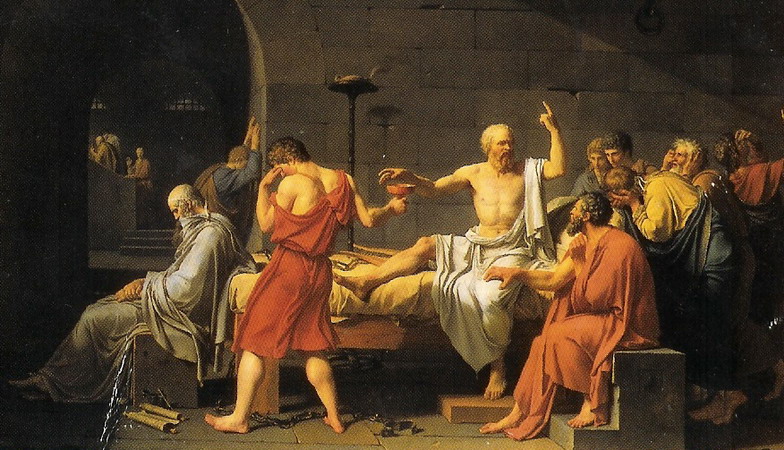 Someone will say: And are you not ashamed, Socrates, of a course of life which is likely to bring you to an untimely end? To him I may fairly answer: There you are mistaken: a man who is good for anything ought not to calculate the chance of living or dying; he ought only to consider whether in doing anything he is doing right or wrong - acting the part of a good man or of a bad. Whereas, according to your view, the heroes who fell at Troy were not good for much, and the son of Thetis above all, who altogether despised danger in comparison with disgrace; and when his goddess mother said to him, in his eagerness to slay Hector, that if he avenged his companion Patroclus, and slew Hector, he would die himself - "Fate," as she said, "waits upon you next after Hector"; he, hearing this, utterly despised danger and death, and instead of fearing them, feared rather to live in dishonor, and not to avenge his friend. "Let me die next," he replies, "and be avenged of my enemy, rather than abide here by the beaked ships, a scorn and a burden of the earth." Had Achilles any thought of death and danger? For wherever a man's place is, whether the place which he has chosen or that in which he has been placed by a commander, there he ought to remain in the hour of danger; he should not think of death or of anything, but of disgrace. And this, O men of Athens, is a true saying….
Men of Athens, do not interrupt, but hear me; there was an agreement between us that you should hear me out. And I think that what I am going to say will do you good: for I have something more to say, at which you may be inclined to cry out; but I beg that you will not do this. I would have you know that, if you kill such a one as I am, you will injure yourselves more than you will injure me. Meletus and Anytus will not injure me: they cannot; for it is not in the nature of things that a bad man should injure a better than himself. I do not deny that he may, perhaps, kill him, or drive him into exile, or deprive him of civil rights; and he may imagine, and others may imagine, that he is doing him a great injury: but in that I do not agree with him; for the evil of doing as Anytus is doing - of unjustly taking away another man's life - is greater far. And now, Athenians, I am not going to argue for my own sake, as you may think, but for yours, that you may not sin against the God, or lightly reject his boon by condemning me. For if you kill me you will not easily find another like me, who, if I may use such a ludicrous figure of speech, am a sort of gadfly, given to the state by the God; and the state is like a great and noble steed who is tardy in his motions owing to his very size, and requires to be stirred into life. I am that gadfly which God has given the state and all day long and in all places am always fastening upon you, arousing and persuading and reproaching you. And as you will not easily find another like me, I would advise you to spare me. I dare say that you may feel irritated at being suddenly awakened when you are caught napping; and you may think that if you were to strike me dead, as Anytus advises, which you easily might, then you would sleep on for the remainder of your lives, unless God in his care of you gives you another gadfly. And that I am given to you by God is proved by this: - that if I had been like other men, I should not have neglected all my own concerns, or patiently seen the neglect of them during all these years, and have been doing yours, coming to you individually, like a father or elder brother, exhorting you to regard virtue; this I say, would not be like human nature….
Someone may wonder why I go about in private, giving advice and busying myself with the concerns of others, but do not venture to come forward in public and advise the state. I will tell you the reason of this. You have often heard me speak of an oracle or sign which comes to me, and is the divinity which Meletus ridicules in the indictment. This sign I have had ever since I was a child. The sign is a voice which comes to me and always forbids me to do something which I am going to do, but never commands me to do anything, and this is what stands in the way of my being a politician. And rightly, as I think. For I am certain, O men of Athens, that if I had engaged in politics, I should have perished long ago and done no good either to you or to myself. And don't be offended at my telling you the truth: for the truth is that no man who goes to war with you or any other multitude, honestly struggling against the commission of unrighteousness and wrong in the state, will save his life; he who will really fight for the right, if he would live even for a little while, must have a private station and not a public one….
READING QUESTIONS:
1. What is Socrates’ response to the claim that he should be ashamed of himself? What should one consider in determining how to live?
2. Why does Socrates claim that the Athenians will harm themselves more than him if they put him to death? Which is worse, to act unjustly or to suffer an injustice?
3. To what animal does Socrates compare the city? What is the point of this analogy? How does the philosopher benefit the city?
4. Why does Socrates prefer the private life to the political life? What happens to good men when they pursue politics?
The Holy Bible, 2 Macchabees 7:1-42 (selection from Part I, Session 3)
In the last two seminars we considered various approaches to happiness. We have discussed ancient philosophers who rule out pursuing happiness through base means, as well as the claim that one ought to pursue virtue at all costs because this is the only path to happiness. This first part of our seminars concludes with a consideration of the Christian approach to happiness. Can we be happy in this life? What problems do those who pursue happiness in this life face? What is needed in order to find true happiness?
1 It came to pass also, that seven brethren, together with their mother, were apprehended, and compelled by the king to eat swine's flesh against the law, for which end they were tormented with whips and scourges. 2 But one of them, who was the eldest, said thus: What wouldst thou ask, or learn of us? we are ready to die rather than to transgress the laws of God, received from our fathers. 3 Then the king being angry commanded fryingpans, and brazen caldrons to be made hot: which forthwith being heated, 4 He commanded to cut out the tongue of him that had spoken first: and the skin of his head being drawn off, to chop off also the extremities of his hands and feet, the rest of his brethren, and his mother, looking on. 5 And when he was now maimed in all parts, he commanded him, being yet alive, to be brought to the Are, and to be fried in the fryingpan: and while he was suffering therein long torments, the rest, together with the mother, exhorted one another to die manfully, 6 Saying: The Lord God will look upon the truth, and will take pleasure in us, as Moses declared in the profession of the canticle: And In his servants he will take pleasure. 7 So when the first was dead after this manner, they brought the next to make him a, mocking stock: and when they had pulled off the skin of his head with the hair, they asked him if he would eat, before he were punished throughout the whole body in every limb. 8 But he answered in his own language, and said: I will not do it. Wherefore Ire also in the next place, received the torments of the first: 9 And when he was at the last gasp, he said thus: Thou indeed, O most wicked man, destroyest us out of this present life: but the King of the world will raise us up, who die for his laws, in the resurrection of eternal life. 10 After him the third was made a mocking stock, and when he was required, he quickly put forth his tongue, and courageously stretched out his hands: 11 And said with confidence: These I have from heaven, but for the laws of God I now despise them: because I hope to receive them again from him. 12 So that the king, and they that were with him, wondered at the young man's courage, because he esteemed the torments as nothing. 13 And after he was thus dead, they tormented the fourth in the like manner. 14 And when he was now ready to die, he spoke thus: It is better, being put to death by men, to look for hope from God, to be raised up again by him: for, as to thee thou shalt have no resurrection unto life. 15 And when they had brought the fifth, they tormented him. But he looking upon the king, 16 Said: Whereas thou hast power among men, though thou art corruptible, thou dost what thou wilt: but think not that our nation is forsaken by God. 17 But stay patiently a while, and thou shalt see his great power, in what manner he will torment thee and thy seed. 18 After him they brought the sixth, and he being ready to die, spoke thus: Be not deceived without cause: for we suffer these things for ourselves, having sinned against our God, and things worthy of admiration are done to us: 19 But do not think that thou shalt escape unpunished, for that thou attempted to fight against God. 20 Now the mother was to be admired above measure, and worthy to be remembered by good men, who beheld seven sons slain in the space of one day, and bore it with a good courage, for the hope that she had in God: 21 And she bravely exhorted every one of them in her own language, being filled with wisdom: and joining a man's heart to a woman's thought, 22 She said to them: I know not how you were formed in my womb: for I neither gave you breath, nor soul, nor life, neither did I frame the limbs of every one of you. 23 But the Creator of the world, that formed the nativity of man, and that found out the origin of all, he will restore to you again in his mercy, both breath and life, as now you despise yourselves for the sake of his laws. 24 Now Antiochus, thinking himself despised, and withal despising the voice of the upbraider, when the youngest was yet alive, did not only exhort him by words, but also assured him with an oath, that he would make him a rich and a happy man, and, if he would turn from the laws of his fathers, would take him for a friend, and furnish him with things necessary. 25 But when the young man was not moved with these things, the king called the mother, and counselled her to deal with the young man to save his life. 26 And when he had exhorted her with many words, she promised that she would counsel her son. 27 So bending herself towards him, mocking the cruel tyrant, she said in her own language: My son, have pity upon me, that bore thee nine months my womb, and save thee suck years, and nourished thee, and brought thee up unto this age. 28 I beseech thee, my son, look upon heaven and earth, and all that is in them: and consider that God made them out of nothing, and mankind also: 29 So thou shalt not fear this tormentor, but being made a worthy partner with thy brethren, receive death, that in that mercy I may receive thee again with thy brethren. 30 While she was yet speaking these words, the young man said: For whom do you stay? I will not obey the commandment of the king, but the commandment of the law, which was given us by Moses. 31 But thou that hast been the author of all mischief against the Hebrews, shalt not escape the hand of God. 32 For we suffer thus for our sins. 33 And though the Lord our God is angry with us a little while for our chastisement and correction: yet he will be reconciled again to his servants. 34 But thou, O wicked and of all men most flagitious, be not lifted up without cause with vain hopes, whilst thou art raging against his servants. 35 For thou hast not yet escaped the judgment of the almighty God, who beholdeth all things. 36 For my brethren, having now undergone a short pain, are under the covenant of eternal life: but thou by the judgment of God shalt receive just punishment for thy pride. 37 But I, like my brethren, offer up my life and my body for the laws of our fathers: calling upon God to be speedily merciful to our nation, and that thou by torments and stripes mayst confess that he alone is God. 38 But in me and in my brethren the wrath of the Almighty, which hath justly been brought upon all our nation, shall cease. 39 Then the king being incensed with anger, raged against him more cruelly than all the rest, taking it grievously that he was mocked. 40 So this man also died undefiled, wholly trusting in the Lord. 41 And last of all after the sons the mother also was consumed. 42 But now there is enough said of the sacrifices, and of the excessive cruelties.
READING QUESTIONS:
1. How do the seven brethren and mother face their cruel torture? What are they dying for? What would they rather do than betray God’s laws?
2. What allows this noble family to so confidently face death (be sure to consider the individual statements of each of them)? Consider whether a similar consolation is offered to the philosophers we discussed in seminar two.
1 It came to pass also, that seven brethren, together with their mother, were apprehended, and compelled by the king to eat swine's flesh against the law, for which end they were tormented with whips and scourges. 2 But one of them, who was the eldest, said thus: What wouldst thou ask, or learn of us? we are ready to die rather than to transgress the laws of God, received from our fathers. 3 Then the king being angry commanded fryingpans, and brazen caldrons to be made hot: which forthwith being heated, 4 He commanded to cut out the tongue of him that had spoken first: and the skin of his head being drawn off, to chop off also the extremities of his hands and feet, the rest of his brethren, and his mother, looking on. 5 And when he was now maimed in all parts, he commanded him, being yet alive, to be brought to the Are, and to be fried in the fryingpan: and while he was suffering therein long torments, the rest, together with the mother, exhorted one another to die manfully, 6 Saying: The Lord God will look upon the truth, and will take pleasure in us, as Moses declared in the profession of the canticle: And In his servants he will take pleasure. 7 So when the first was dead after this manner, they brought the next to make him a, mocking stock: and when they had pulled off the skin of his head with the hair, they asked him if he would eat, before he were punished throughout the whole body in every limb. 8 But he answered in his own language, and said: I will not do it. Wherefore Ire also in the next place, received the torments of the first: 9 And when he was at the last gasp, he said thus: Thou indeed, O most wicked man, destroyest us out of this present life: but the King of the world will raise us up, who die for his laws, in the resurrection of eternal life. 10 After him the third was made a mocking stock, and when he was required, he quickly put forth his tongue, and courageously stretched out his hands: 11 And said with confidence: These I have from heaven, but for the laws of God I now despise them: because I hope to receive them again from him. 12 So that the king, and they that were with him, wondered at the young man's courage, because he esteemed the torments as nothing. 13 And after he was thus dead, they tormented the fourth in the like manner. 14 And when he was now ready to die, he spoke thus: It is better, being put to death by men, to look for hope from God, to be raised up again by him: for, as to thee thou shalt have no resurrection unto life. 15 And when they had brought the fifth, they tormented him. But he looking upon the king, 16 Said: Whereas thou hast power among men, though thou art corruptible, thou dost what thou wilt: but think not that our nation is forsaken by God. 17 But stay patiently a while, and thou shalt see his great power, in what manner he will torment thee and thy seed. 18 After him they brought the sixth, and he being ready to die, spoke thus: Be not deceived without cause: for we suffer these things for ourselves, having sinned against our God, and things worthy of admiration are done to us: 19 But do not think that thou shalt escape unpunished, for that thou attempted to fight against God. 20 Now the mother was to be admired above measure, and worthy to be remembered by good men, who beheld seven sons slain in the space of one day, and bore it with a good courage, for the hope that she had in God: 21 And she bravely exhorted every one of them in her own language, being filled with wisdom: and joining a man's heart to a woman's thought, 22 She said to them: I know not how you were formed in my womb: for I neither gave you breath, nor soul, nor life, neither did I frame the limbs of every one of you. 23 But the Creator of the world, that formed the nativity of man, and that found out the origin of all, he will restore to you again in his mercy, both breath and life, as now you despise yourselves for the sake of his laws. 24 Now Antiochus, thinking himself despised, and withal despising the voice of the upbraider, when the youngest was yet alive, did not only exhort him by words, but also assured him with an oath, that he would make him a rich and a happy man, and, if he would turn from the laws of his fathers, would take him for a friend, and furnish him with things necessary. 25 But when the young man was not moved with these things, the king called the mother, and counselled her to deal with the young man to save his life. 26 And when he had exhorted her with many words, she promised that she would counsel her son. 27 So bending herself towards him, mocking the cruel tyrant, she said in her own language: My son, have pity upon me, that bore thee nine months my womb, and save thee suck years, and nourished thee, and brought thee up unto this age. 28 I beseech thee, my son, look upon heaven and earth, and all that is in them: and consider that God made them out of nothing, and mankind also: 29 So thou shalt not fear this tormentor, but being made a worthy partner with thy brethren, receive death, that in that mercy I may receive thee again with thy brethren. 30 While she was yet speaking these words, the young man said: For whom do you stay? I will not obey the commandment of the king, but the commandment of the law, which was given us by Moses. 31 But thou that hast been the author of all mischief against the Hebrews, shalt not escape the hand of God. 32 For we suffer thus for our sins. 33 And though the Lord our God is angry with us a little while for our chastisement and correction: yet he will be reconciled again to his servants. 34 But thou, O wicked and of all men most flagitious, be not lifted up without cause with vain hopes, whilst thou art raging against his servants. 35 For thou hast not yet escaped the judgment of the almighty God, who beholdeth all things. 36 For my brethren, having now undergone a short pain, are under the covenant of eternal life: but thou by the judgment of God shalt receive just punishment for thy pride. 37 But I, like my brethren, offer up my life and my body for the laws of our fathers: calling upon God to be speedily merciful to our nation, and that thou by torments and stripes mayst confess that he alone is God. 38 But in me and in my brethren the wrath of the Almighty, which hath justly been brought upon all our nation, shall cease. 39 Then the king being incensed with anger, raged against him more cruelly than all the rest, taking it grievously that he was mocked. 40 So this man also died undefiled, wholly trusting in the Lord. 41 And last of all after the sons the mother also was consumed. 42 But now there is enough said of the sacrifices, and of the excessive cruelties.
READING QUESTIONS:
1. How do the seven brethren and mother face their cruel torture? What are they dying for? What would they rather do than betray God’s laws?
2. What allows this noble family to so confidently face death (be sure to consider the individual statements of each of them)? Consider whether a similar consolation is offered to the philosophers we discussed in seminar two.
Summa Theologiae I q. 32 article 1, Saint Thomas Aquinas (selection from Part II, Session 1)
God’s existence is knowable according to the natural human power of reason, without the aid of supernatural revelation. However, this knowledge of God is indirect, a matter of understanding God as the condition for finite existence. Knowing who God is in himself requires a personal self-revelation on God’s own part, for the divine nature as such infinitely transcends our nature and its capacity to know. But this is precisely what God has done. In Jesus Christ, God has freely revealed, out of sheer love, the innermost secret of his life: that God is Trinity— Father, Son, and Holy Spirit. This is the central mystery of Christian faith, which means that it is the deepest truth of all being. Here we glimpse the ultimate context for our natural sense that human happiness is to be found in loving and being loved (already implicitly contained in Aristotle’s definition of man as the political animal): God reveals that his life is nothing other than an eternal exchange of love—God is love. Even more, Jesus Christ reveals that the Blessed Trinity has graciously willed that man’s ultimate fulfillment, the fulfillment of our embodied powers of knowing and loving, be found in nothing less than incorporation into this Trinitarian life. That is, man’s final good, his end, is not natural; it is supernatural. God himself is our end. This opens for humanity a horizon of happiness that infinitely surpasses even the natural joys of human life: a life of eternal love in the embrace of Father, Son, and Holy Spirit. Here we move beyond philosophy. For the remaining sessions, we will be operating in the orbit of Catholic theology, which is the use of reason to gain some understanding of the riches of faith in Christ.
Article 1. Whether the trinity of the divine persons can be known by natural reason?
Hilary says (De Trin. i), "Let no man think to reach the sacred mystery of generation by his own mind." And Ambrose says (De Fide ii, 5), "It is impossible to know the secret of generation. The mind fails, the voice is silent." But the trinity of the divine persons is distinguished by origin of generation and procession (30, 2). Since, therefore, man cannot know, and with his understanding grasp that for which no necessary reason can be given, it follows that the trinity of persons cannot be known by reason.
I answer that, It is impossible to attain to the knowledge of the Trinity by natural reason. For, as above explained (12, 4, 12), man cannot obtain the knowledge of God by natural reason except from creatures. Now creatures lead us to the knowledge of God, as effects do to their cause. Accordingly, by natural reason we can know of God that only which of necessity belongs to Him as the principle of things, and we have cited this fundamental principle in treating of God as above (12, 12). Now, the creative power of God is common to the whole Trinity; and hence it belongs to the unity of the essence, and not to the distinction of the persons. Therefore, by natural reason we can know what belongs to the unity of the essence, but not what belongs to the distinction of the persons. Whoever, then, tries to prove the trinity of persons by natural reason, derogates from faith in two ways.
Firstly, as regards the dignity of faith itself, which consists in its being concerned with invisible things, that exceed human reason; wherefore the Apostle says that "faith is of things that appear not" (Hebrews 11:1), and the same Apostle says also, "We speak wisdom among the perfect, but not the wisdom of this world, nor of the princes of this world; but we speak the wisdom of God in a mystery which is hidden" (1 Cor. 2:6,7).
Secondly, as regards the utility of drawing others to the faith. For when anyone in the endeavor to prove the faith brings forward reasons which are not cogent, he falls under the ridicule of the unbelievers: since they suppose that we stand upon such reasons, and that we believe on such grounds.
Therefore, we must not attempt to prove what is of faith, except by authority alone, to those who receive the authority; while as regards others it suffices to prove that what faith teaches is not impossible. Hence it is said by Dionysius (Div. Nom. ii): "Whoever wholly resists the word, is far off from our philosophy; whereas if he regards the truth of the word"--i.e. "the sacred word, we too follow this rule."
Excerpt from: Saint Thomas Aquinas, The Compendium of Theology
But there are other truths about God revealed to us in the teaching of the Christian religion, which were beyond the reach of the philosophers. These are truths about which we are instructed, in accord with the norm of Christian faith, in a way that transcends human perception. The teaching is that although God is one and simple, as has been explained above, God is Father, God is Son, and God is Holy Spirit. And these three are not three gods, but are one God. We now turn to a consideration of this truth, so far as is possible to us.
37 The Word in God: We take from the doctrine previously laid down that God understands and loves Himself and that understanding and willing in Him are not something distinct from His essence. Since God understands Himself, and since all that is understood is in the person who understands, God must be in Himself as the object understood is in the person understanding. But the object understood, so far as it is in the one who understands, is a certain word of the intellect. We signify by an exterior word what we comprehend interiorly in our intellect. For words, according to the Philosopher, are signs of intellectual concepts. Hence we must acknowledge in God the existence of His Word.
39 Relation of the Word to the Father: …What is conceived in the intellect is a likeness of the thing understood and represents its species [image]; and so it seems to be a sort of offspring of the intellect. Therefore, when the intellect understands something other than itself, the thing understood is, so to speak, the father of the word conceived in the intellect, and the intellect itself resembles rather a mother, whose function is such that conception takes place in her. But when the intellect understands itself, the word conceived is related to the understanding person as offspring to father. Consequently, since we are using the term word in the latter sense (that is, according as God understands Himself), the word itself must be related to God, from whom the word proceeds, as Son to Father.
45 God in Himself as beloved in lover: As the object known is in the knower to the extent that it is known, so the beloved must be in the lover, as loved. The lover is, in some way, moved by the beloved with a certain interior impulse. Therefore, since a mover is in contact with the object moved the beloved must be intrinsic to the lover. But God, just as He understands Himself, must likewise love Himself; for good, as apprehended, is in itself lovable. Consequently God is in Himself as beloved in lover.
46 Love in God as Spirit: Since the object known is in the knower and the beloved is in the lover, the different ways of existing in something must be considered in the two cases before us. The act of understanding takes place by a certain assimilation of the knower to the object known; and so the object known must be in the knower in the sense that a likeness of it is present in him. But the act of loving takes place through a sort of impulse engendered in the lover by the beloved: the beloved draws the lover to himself. Accordingly, the act of loving reaches its perfection not in a likeness of the beloved (in the way that the act of understanding reaches perfection in a likeness of the object understood); rather the act of loving reaches its perfection in a drawing of the lover to the beloved in person.
47 Holiness of the Spirit in God: …Since good that is loved has the nature of an end, and since the motion of the will is designated good or evil in terms of the end it pursues, the love whereby the supreme good that is God is loved must possess the supereminent goodness that goes by the name of holiness. ...Rightly, then, the Spirit, who represents to us the love whereby God loves Himself, is called the Holy Spirit. For this reason the rule of the Catholic Faith proclaims that the Spirit is holy, in the clause, “I believe in the Holy Spirit.”
49 Procession of the Holy Spirit from the Father and the Son: We should recall that the act of understanding proceeds from the intellectual power of the mind. When the intellect actually understands, the object it understands is in it. The presence of the object known in the knower results from the intellectual power of the mind, and is its word, as we said above. Likewise, what is loved is in the lover, when it is actually loved. The fact that an object is actually loved, results from the lover’s power to love and also from the lovable good as actually known. Accordingly, the presence of the beloved object in the lover is brought about by two factors: the appetitive principle and the intelligible object as apprehended (that is, the word conceived about the lovable object). Therefore, since the Word in God who knows and loves Himself is the Son, and since He to whom the Word belongs is the Father of the Word, as is clear from our exposition, the necessary consequence is that the Holy Spirit, who pertains to the love whereby God is in Himself as beloved in lover, proceeds from the Father and the Son. And so we say in the Creed: “who proceeds from the Father and the Son.”
50 The Trinity of divine persons and the unity of the divine essence: We must conclude from all we have said that in the Godhead there is something threefold which is not opposed to the unity and simplicity of the divine essence. We must acknowledge that God is, as existing in His nature, and that He is known and loved by Himself. But this occurs otherwise in God than in us. Man, to be sure, is a substance in his nature, but his actions of knowing and loving are not his substance. Considered in his nature, man is indeed a subsisting thing; as he exists in his mind, however, he is not a subsisting thing, but a certain representation of a subsisting thing; and similarly with regard to his existence in himself as beloved in lover. Thus man may be regarded under three aspects: that is, man existing in his nature, man existing in his intellect, and man existing in his love. Yet these three are not one, for man’s knowing is not his existing, and the same is true of his loving. Only one of these three is a subsisting thing, namely, man existing in his nature. In God, on the contrary, to be, to know, and to love are identical. Therefore God existing in His natural being and God existing in the divine intellect and God existing in the divine love are one thing. Yet each of them is subsistent. And, as things subsisting in intellectual nature are usually called persons, [we] say that there are three persons in God, namely, the Father, the Son, and the Holy Spirit.
READING QUESTIONS:
1. According to St. Thomas Aquinas, can the Triune nature of God be known through reason alone?
2. The three Persons of the Blessed Trinity are really distinct from each other and yet there is only one divine nature: truly one God, truly three Persons. In order to gain some understanding of this incomprehensible fact, Thomas uses an analogy from human knowing and loving. The generation of the Son/Word from the Father is compared to the conception, in the mind, of an inner word expressing an act of understanding or judging (in this case, the self-knowing of God). According to this analogy, how is the Word really distinct from the Father? How are they united?
3. The second procession in God, that of the Holy Spirit, is explained on the analogy of the procession according to love in us. When we understand and affirm something true (and therefore good and beautiful), we love that reality. The Holy Spirit is this Love proceeding from the Father and the Son. How is the analogy of the procession of the Spirit like and unlike that of the Word? How might the procession of the Holy Spirit shed light on the fact that we are given the powers of knowing and loving precisely to love and be loved, that is, the fact that man’s vocation is to make a sincere gift of self?
4. How is human knowing and loving like and unlike that of God?
5. If we cannot prove that God is a Trinity to unbelievers (or “others” as Aquinas says), what can reason do? What does he mean by saying that we can prove that the teachings of the faith are not “impossible?”
Article 1. Whether the trinity of the divine persons can be known by natural reason?
Hilary says (De Trin. i), "Let no man think to reach the sacred mystery of generation by his own mind." And Ambrose says (De Fide ii, 5), "It is impossible to know the secret of generation. The mind fails, the voice is silent." But the trinity of the divine persons is distinguished by origin of generation and procession (30, 2). Since, therefore, man cannot know, and with his understanding grasp that for which no necessary reason can be given, it follows that the trinity of persons cannot be known by reason.
I answer that, It is impossible to attain to the knowledge of the Trinity by natural reason. For, as above explained (12, 4, 12), man cannot obtain the knowledge of God by natural reason except from creatures. Now creatures lead us to the knowledge of God, as effects do to their cause. Accordingly, by natural reason we can know of God that only which of necessity belongs to Him as the principle of things, and we have cited this fundamental principle in treating of God as above (12, 12). Now, the creative power of God is common to the whole Trinity; and hence it belongs to the unity of the essence, and not to the distinction of the persons. Therefore, by natural reason we can know what belongs to the unity of the essence, but not what belongs to the distinction of the persons. Whoever, then, tries to prove the trinity of persons by natural reason, derogates from faith in two ways.
Firstly, as regards the dignity of faith itself, which consists in its being concerned with invisible things, that exceed human reason; wherefore the Apostle says that "faith is of things that appear not" (Hebrews 11:1), and the same Apostle says also, "We speak wisdom among the perfect, but not the wisdom of this world, nor of the princes of this world; but we speak the wisdom of God in a mystery which is hidden" (1 Cor. 2:6,7).
Secondly, as regards the utility of drawing others to the faith. For when anyone in the endeavor to prove the faith brings forward reasons which are not cogent, he falls under the ridicule of the unbelievers: since they suppose that we stand upon such reasons, and that we believe on such grounds.
Therefore, we must not attempt to prove what is of faith, except by authority alone, to those who receive the authority; while as regards others it suffices to prove that what faith teaches is not impossible. Hence it is said by Dionysius (Div. Nom. ii): "Whoever wholly resists the word, is far off from our philosophy; whereas if he regards the truth of the word"--i.e. "the sacred word, we too follow this rule."
Excerpt from: Saint Thomas Aquinas, The Compendium of Theology
But there are other truths about God revealed to us in the teaching of the Christian religion, which were beyond the reach of the philosophers. These are truths about which we are instructed, in accord with the norm of Christian faith, in a way that transcends human perception. The teaching is that although God is one and simple, as has been explained above, God is Father, God is Son, and God is Holy Spirit. And these three are not three gods, but are one God. We now turn to a consideration of this truth, so far as is possible to us.
37 The Word in God: We take from the doctrine previously laid down that God understands and loves Himself and that understanding and willing in Him are not something distinct from His essence. Since God understands Himself, and since all that is understood is in the person who understands, God must be in Himself as the object understood is in the person understanding. But the object understood, so far as it is in the one who understands, is a certain word of the intellect. We signify by an exterior word what we comprehend interiorly in our intellect. For words, according to the Philosopher, are signs of intellectual concepts. Hence we must acknowledge in God the existence of His Word.
39 Relation of the Word to the Father: …What is conceived in the intellect is a likeness of the thing understood and represents its species [image]; and so it seems to be a sort of offspring of the intellect. Therefore, when the intellect understands something other than itself, the thing understood is, so to speak, the father of the word conceived in the intellect, and the intellect itself resembles rather a mother, whose function is such that conception takes place in her. But when the intellect understands itself, the word conceived is related to the understanding person as offspring to father. Consequently, since we are using the term word in the latter sense (that is, according as God understands Himself), the word itself must be related to God, from whom the word proceeds, as Son to Father.
45 God in Himself as beloved in lover: As the object known is in the knower to the extent that it is known, so the beloved must be in the lover, as loved. The lover is, in some way, moved by the beloved with a certain interior impulse. Therefore, since a mover is in contact with the object moved the beloved must be intrinsic to the lover. But God, just as He understands Himself, must likewise love Himself; for good, as apprehended, is in itself lovable. Consequently God is in Himself as beloved in lover.
46 Love in God as Spirit: Since the object known is in the knower and the beloved is in the lover, the different ways of existing in something must be considered in the two cases before us. The act of understanding takes place by a certain assimilation of the knower to the object known; and so the object known must be in the knower in the sense that a likeness of it is present in him. But the act of loving takes place through a sort of impulse engendered in the lover by the beloved: the beloved draws the lover to himself. Accordingly, the act of loving reaches its perfection not in a likeness of the beloved (in the way that the act of understanding reaches perfection in a likeness of the object understood); rather the act of loving reaches its perfection in a drawing of the lover to the beloved in person.
47 Holiness of the Spirit in God: …Since good that is loved has the nature of an end, and since the motion of the will is designated good or evil in terms of the end it pursues, the love whereby the supreme good that is God is loved must possess the supereminent goodness that goes by the name of holiness. ...Rightly, then, the Spirit, who represents to us the love whereby God loves Himself, is called the Holy Spirit. For this reason the rule of the Catholic Faith proclaims that the Spirit is holy, in the clause, “I believe in the Holy Spirit.”
49 Procession of the Holy Spirit from the Father and the Son: We should recall that the act of understanding proceeds from the intellectual power of the mind. When the intellect actually understands, the object it understands is in it. The presence of the object known in the knower results from the intellectual power of the mind, and is its word, as we said above. Likewise, what is loved is in the lover, when it is actually loved. The fact that an object is actually loved, results from the lover’s power to love and also from the lovable good as actually known. Accordingly, the presence of the beloved object in the lover is brought about by two factors: the appetitive principle and the intelligible object as apprehended (that is, the word conceived about the lovable object). Therefore, since the Word in God who knows and loves Himself is the Son, and since He to whom the Word belongs is the Father of the Word, as is clear from our exposition, the necessary consequence is that the Holy Spirit, who pertains to the love whereby God is in Himself as beloved in lover, proceeds from the Father and the Son. And so we say in the Creed: “who proceeds from the Father and the Son.”
50 The Trinity of divine persons and the unity of the divine essence: We must conclude from all we have said that in the Godhead there is something threefold which is not opposed to the unity and simplicity of the divine essence. We must acknowledge that God is, as existing in His nature, and that He is known and loved by Himself. But this occurs otherwise in God than in us. Man, to be sure, is a substance in his nature, but his actions of knowing and loving are not his substance. Considered in his nature, man is indeed a subsisting thing; as he exists in his mind, however, he is not a subsisting thing, but a certain representation of a subsisting thing; and similarly with regard to his existence in himself as beloved in lover. Thus man may be regarded under three aspects: that is, man existing in his nature, man existing in his intellect, and man existing in his love. Yet these three are not one, for man’s knowing is not his existing, and the same is true of his loving. Only one of these three is a subsisting thing, namely, man existing in his nature. In God, on the contrary, to be, to know, and to love are identical. Therefore God existing in His natural being and God existing in the divine intellect and God existing in the divine love are one thing. Yet each of them is subsistent. And, as things subsisting in intellectual nature are usually called persons, [we] say that there are three persons in God, namely, the Father, the Son, and the Holy Spirit.
READING QUESTIONS:
1. According to St. Thomas Aquinas, can the Triune nature of God be known through reason alone?
2. The three Persons of the Blessed Trinity are really distinct from each other and yet there is only one divine nature: truly one God, truly three Persons. In order to gain some understanding of this incomprehensible fact, Thomas uses an analogy from human knowing and loving. The generation of the Son/Word from the Father is compared to the conception, in the mind, of an inner word expressing an act of understanding or judging (in this case, the self-knowing of God). According to this analogy, how is the Word really distinct from the Father? How are they united?
3. The second procession in God, that of the Holy Spirit, is explained on the analogy of the procession according to love in us. When we understand and affirm something true (and therefore good and beautiful), we love that reality. The Holy Spirit is this Love proceeding from the Father and the Son. How is the analogy of the procession of the Spirit like and unlike that of the Word? How might the procession of the Holy Spirit shed light on the fact that we are given the powers of knowing and loving precisely to love and be loved, that is, the fact that man’s vocation is to make a sincere gift of self?
4. How is human knowing and loving like and unlike that of God?
5. If we cannot prove that God is a Trinity to unbelievers (or “others” as Aquinas says), what can reason do? What does he mean by saying that we can prove that the teachings of the faith are not “impossible?”
Subscribe to:
Posts (Atom)
